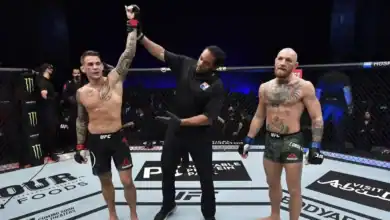
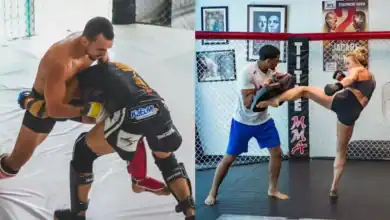
In 1993, a 175-lb Brazilian named Royce Gracie walked into a cage against fighters who outweighed him by 30 to 50 pounds — and submitted every single one of them. He wasn’t the biggest or the strongest. He just knew something they didn’t: Brazilian Jiu-Jitsu.
That night at UFC 1 changed combat sports permanently. It didn’t just prove BJJ worked against other martial arts — it proved that technique from the right system could beat raw athleticism. And it launched the question that every MMA fan and aspiring fighter has been asking ever since: which fighting style actually wins?
The answer, 30 years later, is more specific than “it depends.” The data exists. As of 2024, wrestling backgrounds have produced 31 UFC champions — more than any other single discipline. BJJ is second with 17, boxing third with 13. Those numbers tell a story about what separates fighters who win titles from fighters who contend.
In this complete guide to MMA fighting styles, we’ll break down every major martial art used in the UFC — what each one contributes, which champions built their careers on it, where each style is strong, and where it breaks down. At the end, there’s a data-backed answer for anyone who wants to start training and doesn’t know where to begin.
What Martial Arts Are Used in MMA? The 3 Combat Zones Every Fighter Must Master
Before getting into individual styles, it helps to understand the structure of an MMA fight. Every exchange — every scramble, every exchange of punches, every takedown attempt — happens in one of three zones. Each zone is dominated by different disciplines.
| Zone | What Happens Here | Dominant Disciplines |
| Standing / Striking | Punches, kicks, elbows, knees at distance | Muay Thai, Boxing, Kickboxing |
| Clinch | Close-range strikes, throws, takedown attempts | Muay Thai, Wrestling, Judo, Sambo |
| Ground | Positional control, submissions, ground-and-pound | BJJ, Wrestling |
The best UFC fighters are dangerous in all three zones. They don’t have a “home” — they make every location uncomfortable for the other person. Most fighters, though, build around one zone first and layer the others on top over years of training.
Here’s the breakdown of every major style, what it brings to the cage, and which champions used it to win titles.
The 6 Core MMA Fighting Styles Used in the UFC
These six disciplines form the foundation of virtually every UFC fighter’s game. Some serve as primary bases — the system where a fighter does their best work. Others are essential additions that fill critical gaps in a complete fighting game.
1. Wrestling — The Most Dominant Base in UFC History
Wrestling has produced more UFC champions than any other martial art — 31 as of 2024. Khabib Nurmagomedov, Daniel Cormier, Cain Velasquez, Randy Couture, Henry Cejudo, Islam Makhachev. The list runs deep across every weight class and every era of the sport.
The reason isn’t complicated. Wrestling gives a fighter the single most valuable skill in MMA: the ability to choose where the fight happens. A wrestler decides whether the action stays standing or goes to the ground. Their opponent reacts. That asymmetry — one person dictating, one person responding — is the structural advantage that makes wrestling the bedrock of modern MMA.
What wrestling adds to an MMA game is wide-ranging. Offensive takedowns (double-leg, single-leg, body lock), takedown defense (the sprawl), cage wrestling, clinch control, and top pressure from dominant ground positions. Wrestling is also arguably the most physically demanding base discipline — the conditioning it builds transfers directly to five-minute UFC rounds.
The style produces two archetypes in the UFC. The first is the “wrestling-dominant” fighter who takes fights to the ground and controls them there — Khabib being the extreme example. The second is the “sprawl-and-brawl” fighter who uses wrestling defensively to stay standing and uses their striking to win — a style that’s produced champions like Junior dos Santos and Alistair Overeem, both of whom had sufficient wrestling to neutralize takedowns while doing their best work on the feet.
The weakness: Traditional wrestlers who come from collegiate or Olympic backgrounds can struggle on their back. Their training didn’t prepare them for being submitted from bottom position, so BJJ becomes a necessary addition. A pure wrestler without submission defense is a fighter waiting to be caught.
One-liner: If you could only learn one martial art for MMA, the data says wrestling. It doesn’t just help you win rounds — it lets you choose which round you’re even in.
2. Brazilian Jiu-Jitsu (BJJ) — The Art of Making Bigger Opponents Tap
Royce Gracie’s dominance at UFC 1, 2, and 4 was the founding event of modern MMA, but it wasn’t a fluke. He won those tournaments because BJJ gave him tools that no one else in the cage had seen used at that level: the ability to attack from the bottom, the technical language to move between dominant positions, and a library of fight-ending submissions from angles opponents didn’t know to defend.
BJJ’s contribution to MMA is centered on ground grappling. Submissions — rear naked chokes, guillotines, triangles, armbars, kimuras, heel hooks — give a BJJ-based fighter the ability to end a fight from almost any position, including from underneath an opponent. That last part is what separates BJJ from every other ground discipline: its guard system teaches fighters to be dangerous on their back. A high-level guard means that a wrestler’s greatest weapon — the takedown — becomes a calculated risk rather than a guaranteed advantage.
Charles Oliveira is the clearest modern example. He holds the record for the most submission victories in UFC history, and he built that record by finishing fighters from positions they thought were safe. Demian Maia spent years submitting world-class fighters with a grappling game so precise that opponents essentially knew what was coming and still couldn’t stop it.
Beyond offensive submissions, BJJ provides something every UFC fighter needs regardless of their primary style: submission defense. A boxer who gets taken down and has no ground game is immediately in danger. A wrestler who doesn’t understand choke defense can be put to sleep by the first BJJ specialist they face. BJJ’s ground survival skills are the insurance policy every MMA fighter carries, whether they plan to use BJJ offensively or not.
The weakness: BJJ specialists without strong takedown ability may struggle to get the fight to the ground against elite wrestlers. And the transition between standing and ground — that window where a fighter is changing levels — exposes them to strikes. Most elite BJJ fighters have addressed this, but it remains the style’s structural challenge.
A notable 2025 development: The UFC launched UFC BJJ, a standalone submission grappling promotion, signaling just how central the discipline has become to combat sports culture globally. It’s no longer just one ingredient in MMA — it’s a sport within the sport.
One-liner: BJJ is the equalizer. It’s why a 155-lb fighter can submit a 185-lb one — and why every UFC fighter, regardless of base style, must know at least the fundamentals of ground defense.
3. Muay Thai — “The Art of Eight Limbs” and the UFC’s Most Productive Striking Base
The raw champion count doesn’t do Muay Thai justice. The style has produced 5 primary-base UFC champions — fewer than wrestling or BJJ by that metric. But those 5 fighters combined for 33 title defenses, more than any other striking discipline. When Muay Thai fighters reach the top of the UFC, they tend to stay there.
Anderson Silva’s 10 title defenses at middleweight is a significant portion of that number, and it shows what elite Muay Thai looks like when no one can solve it. His timing, his front kick knockouts, his elbow precision — it was a masterclass in using all eight limbs to keep opponents confused and hurt at the same time.
What makes Muay Thai the UFC standard for striking is its completeness. Fists, elbows, knees, and shin kicks — no other striking art trains all four with equal seriousness. That range means a Muay Thai-based fighter isn’t limited to a single distance. They’re dangerous far out with teep kicks and body kicks, dangerous at mid-range with combinations and head kicks, and dangerous in the clinch with elbows and knees.
The clinch is Muay Thai’s most MMA-relevant weapon. The plum clinch — gripping behind the neck and delivering knees — translates directly to cage work, where two fighters regularly end up tied together against the fence. Most clinch situations in the UFC are settled by whoever has better Muay Thai. Jose Aldo used this to dominate the UFC featherweight division for nearly a decade. Joanna Jędrzejczyk used it at strawweight to outwork opponents who couldn’t handle her pressure from range.
Leg kicks deserve their own mention. The Muay Thai low kick — shin to the thigh — is one of the most effective tools in MMA because it accumulates damage across a full fight. By round three, a fighter who has absorbed consistent leg kicks is moving differently. Their base is compromised. Strikes they could defend in round one start landing. It’s a style that pays dividends late.
The weakness: Muay Thai’s upright, relatively flat-footed stance can be vulnerable to explosive level changes for takedowns. Fighters who bring a pure Muay Thai game into MMA without strong takedown defense become easy to take down, which neutralizes everything they do well.
Champions: Anderson Silva, Israel Adesanya, Jose Aldo, Joanna Jędrzejczyk, Valentina Shevchenko.
One-liner: If wrestling decides where the fight happens, Muay Thai decides what happens when it stays standing — and right now, it’s the standard for striking in the UFC.
4. Boxing — The Sweet Science That Teaches UFC Fighters to Hit (and Not Get Hit)
Boxing and Muay Thai are frequently lumped together by new fans, but they serve distinct roles in a mixed game. Muay Thai brings more weapons. Boxing brings more technical depth in the ones they share.
No martial art on earth teaches hand striking with the precision and detail that boxing does. Punch mechanics — weight transfer, shoulder rotation, the geometry of hooks versus straights — are developed over years in boxing gyms in ways that Muay Thai training doesn’t prioritize to the same degree. The result is that fighters with boxing bases tend to have the hardest, most accurate single punches in the UFC. Conor McGregor’s southpaw left hand built a career on it. Junior dos Santos knocked out Cain Velasquez in 64 seconds with it.
But boxing’s contribution to MMA goes beyond power. Footwork and head movement — skills that get far less attention in other striking arts — are boxing’s hidden gifts to an MMA fighter. Head slips, shoulder rolls, the ability to make a punch miss by half an inch rather than stepping back from it — these defensive skills are rare in the UFC and enormously effective when a fighter has them. A boxer who can make opponents miss while countering is operating at a different level than a fighter who simply blocks or absorbs shots.
Fight IQ is another boxing export. The sport’s deep culture of reading rhythms, timing combinations, feinting, and changing pace mid-round transfers directly to MMA stand-up. Dustin Poirier is a good example — his boxing adaptation gave him the timing to land counter shots on fighters who were faster or rangier than him.
The weakness: Pure boxing training teaches fighters to keep their head up and their base stable — exactly the wrong instinct for sprawling against a takedown. Layering takedown defense on top of boxing habits takes significant work, and fighters who don’t make that adjustment become easy targets for wrestlers.
Champions/Best examples: Conor McGregor, Amanda Nunes, Dustin Poirier, Junior dos Santos.
One-liner: Boxing alone won’t win you a UFC title — but a fighter who brings boxing into MMA without addressing the other styles gets taken down and submitted inside the first round.
5. Judo — Throws, Trips, and the Most Underrated Takedown System in MMA
Ronda Rousey didn’t win six UFC title defenses because she was the toughest woman in the room. She won them because she had the most dangerous throw-to-armbar sequence anyone had seen in women’s MMA — and she was better at judo than anyone she faced was at stopping it.
That sequence — plum clinch, hip throw or arm throw, straight into an armbar from top position before the opponent could even register what happened — was pure judo. The throw generated momentum. The transition was practiced thousands of times. The armbar arrived before opponents could compose a defense.
What judo adds to MMA is different from what wrestling adds. Wrestling takedowns are typically explosive shots that require getting to the legs — a double-leg, a single-leg. Judo takedowns happen from clinch grips and are triggered by opponents’ movement against them. An opponent who pushes back against a judo throw is often helping the throw happen. An opponent who stiffens to resist a judo trip gets swept over their own base.
The impact of judo throws can score 10-8 rounds or produce knockouts purely from the force of landing. Unlike a wrestling takedown that puts a fighter on their back with moderate impact, a judo uchi mata or seoi nage can send an opponent into the canvas hard enough to stun them before the ground work even begins.
Judo also transitions to submissions naturally. Most judokas are cross-trained in ground work that leads seamlessly into armbars and chokes — the throw sets up the finish rather than being the end goal itself.
The weakness: Judo is heavily gi-based in its traditional training environment. In MMA, there’s no gi, which changes grip fighting significantly. Setups and entries need adaptation. Without that adaptation work, the style’s ground game is also limited and needs BJJ or wrestling to fill the gaps.
Champions/Best examples: Ronda Rousey (6 UFC women’s bantamweight defenses), Kayla Harrison (2x Olympic gold medalist, now competing in MMA), Karo Parisyan, Yoshihiro Akiyama.
One-liner: Judo is the secret weapon in MMA. When a fighter can throw you from the clinch and go straight to your arm on the way down, there’s very little that prepares you for it.
6. Sambo — Khabib’s Base and the Hybrid System Built for Real Combat
Khabib Nurmagomedov retired undefeated at 29-0. Not once — not across 13 UFC championship rounds — did an opponent come close to turning his fights around. The style behind that record is Combat Sambo, a Russian hybrid of wrestling, judo, and submission grappling that was originally developed as a military combat system.
Combat Sambo is, structurally, the most complete grappling system for MMA because it was purpose-built for real combat rather than sport. Standard wrestling doesn’t heavily emphasize submissions. Standard judo doesn’t deeply develop takedown-to-ground-control sequences. Standard BJJ doesn’t always train explosive takedowns. Combat Sambo combines all of it — and layers in a leg lock arsenal (heel hooks, ankle locks, kneebars) that most fighters spend years learning to defend.
Khabib’s game was this taken to an elite level. He could throw from the clinch like a judoka, take fighters down like a wrestler, and control them on the ground with a smothering top game that made scrambles nearly impossible. His transitions between positions — hip-to-hip, back takes from scrambles, maintaining contact through every movement — reflected a system where everything flows from everything else.
Russia and the former Soviet states have consistently produced some of MMA’s most technically complete grapplers because Combat Sambo wasn’t a hobby in that culture. It was systematic, childhood-to-adulthood training in a system optimized for control.
Champions/Best examples: Khabib Nurmagomedov (29-0, 13 UFC title defenses), Fedor Emelianenko (widely considered the greatest heavyweight in MMA history, dominated Pride FC for years), Islam Makhachev (current UFC lightweight champion).
One-liner: If you want to understand why Khabib was nearly impossible to beat, the answer is two words: Combat Sambo.
Secondary Fighting Styles in MMA — The Specialists and Surprise Weapons
The six styles above cover the vast majority of UFC fighters’ primary backgrounds. These three appear less frequently as primary bases but have produced some of MMA’s most memorable performances — and champions.
Kickboxing — Faster, More Footwork-Heavy Striking Than Muay Thai
Kickboxing uses fists and feet only — no elbows, no knees, no clinch striking. The payoff is combination speed and angular footwork that makes its practitioners extremely difficult to track. Israel Adesanya built his combat base in kickboxing before layering in Muay Thai elements, developing into one of the most technically precise strikers in UFC history. His ability to manipulate distance — moving in and out of range while landing behind a jab — comes directly from kickboxing fundamentals.
Karate — Unorthodox Stances and the Fighters Who Made It Work
Kyokushin karate, the full-contact branch of the discipline, is the most MMA-transferable karate variant. Its value is unconventional: bladed stances, point-style timing, and back-fist combinations that are genuinely hard to read because they don’t look like what opponents train to defend.
Lyoto Machida used a Shotokan karate base to become UFC Light Heavyweight Champion, during which stretch he was called “un-hittable” by opponents. Georges St-Pierre’s Kyokushin karate base, combined with wrestling and BJJ, gave him the timing and footwork that contributed to his case as the most complete fighter in UFC history. Stephen Thompson (“Wonderboy”) turned karate-point-fighting footwork into one of the UFC’s most technically interesting striking games.
Taekwondo — The Most Spectacular KOs in UFC History
Taekwondo’s contribution to MMA is specific: the spinning and jumping kick arsenal. Head kicks, spinning back kicks, reverse heel kicks — all high-risk, high-reward techniques that most combat sports athletes train to avoid. When they land in MMA, the results are some of the sport’s most memorable moments.
Edson Barboza’s spinning heel kick KO of Terry Etim in 2012 remains one of the most technically perfect finishes in UFC history. Anthony Pettis’s spinning wall kick off the cage against Benson Henderson won him the lightweight title and became iconic. Mirko “Cro Cop” Filipović built a career on the left high kick, often described as the most feared single technique in MMA during his peak years.
What’s the Best Fighting Style to Learn First? A Data-Backed Answer for Beginners
Most coaches land in the same place on this question. The working framework in serious MMA gyms is a “holy trinity”: Wrestling + BJJ + Muay Thai. Those three cover all three combat zones. A fighter with genuine competency in all three can compete at any level. The question for someone starting out is which to pick first.
Path A — Start with Grappling (recommended for most beginners)
Start at a wrestling or BJJ gym. The reasoning is practical: grappling is the hardest skill to layer on later. Strikers who come to MMA from boxing or Muay Thai backgrounds — and there are many — often look technically skilled on their feet and completely lost the moment a fight hits the ground. The reverse is less common. A grappler who needs to learn punches and kicks can build functional striking in 6–12 months of consistent work. A striker who needs to learn grappling from zero takes considerably longer, and the anxiety of being controlled on the ground affects how they perform in the standing exchanges too.
Path B — Start with Muay Thai (better for athletes with strong body coordination)
If you have a background in any sport requiring hand-eye coordination or rhythm — boxing, basketball, tennis — Muay Thai as a first gym gets you to functional self-defense standing the fastest. The clinch component also bridges naturally into cage wrestling and takedown defense work, making the grappling addition easier once you’re ready.
A practical three-year framework:
Year 1: Pick one — wrestling, BJJ, or Muay Thai. Get proficient enough that it feels like a language you speak rather than a system you’re memorizing.
Year 2: Add the complement. If you started with grappling, add Muay Thai. If you started with striking, add BJJ. By the end of year two, you should have a primary base and a developing secondary game.
Year 3 and beyond: Start training both simultaneously and letting them inform each other. That’s when you become an MMA fighter rather than a martial artist in multiple disciplines who hasn’t integrated them yet.
MMA Fighting Styles FAQ
There’s no single answer, but data puts wrestling at the top — 31 UFC champions as of 2024, more than any other discipline. In practice, modern MMA requires competency across multiple styles. The most effective long-term approach is the “Big Three”: Wrestling for controlling where the fight happens, BJJ for finishing and ground survival, and Muay Thai for striking. Fighters who genuinely master all three have historically dominated the UFC across every era.
They do different jobs. Wrestling controls where the fight takes place — it’s the foundation for dictating pace, location, and physical positioning. BJJ controls what happens once the fight is on the ground — it provides both offensive submission ability and defensive survival from bad positions. Most elite MMA fighters train both seriously. If forced to pick one starting point, most coaches recommend wrestling because its structural advantage (location control) is harder to compensate for than BJJ gaps.
By most expert and coaching consensus, yes. Its eight weapons — fists, elbows, knees, shin kicks — give it more range than boxing or kickboxing. Its clinch work is specifically valuable in MMA, where cage wrestling and dirty boxing happen constantly. The data backs this up: Muay Thai-based UFC champions have produced 33 combined title defenses, more than any other striking discipline.
Khabib’s base is Combat Sambo — a Russian hybrid that combines judo throws, wrestling takedowns, and submission grappling similar to BJJ. He supplemented it with elite-level sport wrestling. His style is best described as wrestling-based Sambo with constant submission threats: he could take any opponent to the ground and control them with a smothering top game, then finish them with chokes or strikes when they attempted to escape. No opponent came close to solving it across 29 professional fights.
Most professional-level MMA fighters actively train in 3 to 5 disciplines simultaneously. A UFC-caliber fighter typically has a primary base (usually wrestling, BJJ, or Muay Thai), a secondary striking system, and ongoing work in at least one additional grappling art. Fighters who started in MMA directly — rather than crossing over from a single sport — often begin training all disciplines simultaneously from day one at a dedicated MMA gym.
In the UFC’s early years, yes — Royce Gracie demonstrated it conclusively with BJJ. Today, no. The sport has evolved to the point where every serious UFC competitor has competency across all three combat zones. A one-dimensional fighter at UFC level gets their weakness found and exploited inside the first round. Even Demian Maia — one of the greatest BJJ practitioners in UFC history — had to develop functional boxing to create openings for his grappling. Without it, opponents simply stayed at range and never let him grapple.