Fighter compensation continues to sit at the center of combat sports debate, with the gap between boxing and mixed martial arts under the spotlight. Disclosures from the UFC antitrust lawsuit revealed the promotion shares roughly 18 to 20 percent of its revenue with athletes. Boxing traditionally operates near a 62.5 percent revenue-sharing benchmark. This structural gap took center stage again following UFC Freedom 250.
Sean O’Malley secured a second-round TKO victory over Aiemann Zahabi on the White House South Lawn on June 14. Despite the historic setting, O’Malley later confirmed that his base payout was $600,000, a figure lower than what he earned in previous title fights. The UFC reportedly spent around $60 million staging the White House Event.
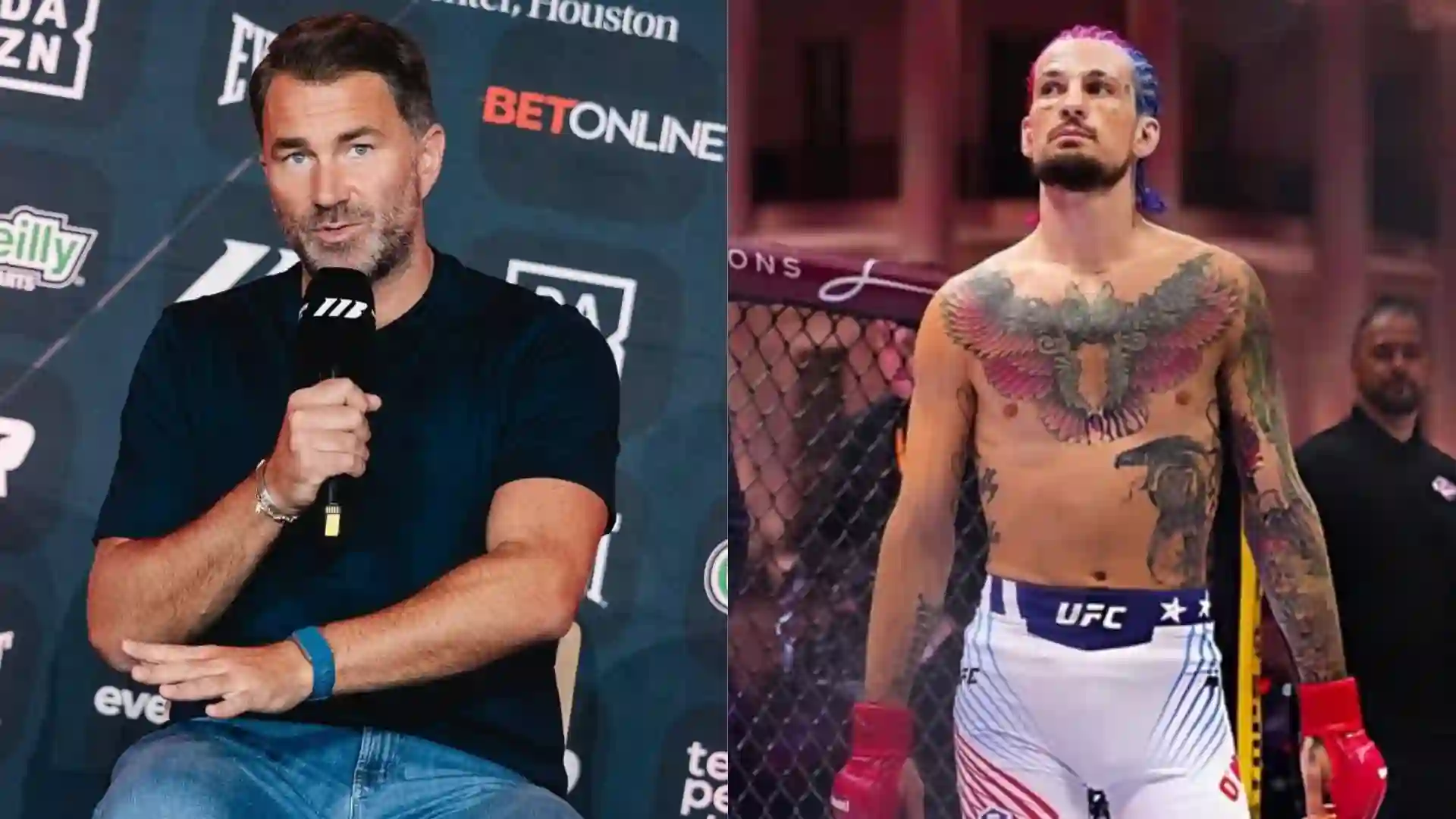
Matchroom Boxing chairman Eddie Hearn used O’Malley’s payout to take direct aim at the promotion’s business model. During an appearance on the Ariel Helwani show, Eddie Hearn took a dig at UFC for deliberately suppressing its roster to maintain strict leverage over contract negotiations.
I saw the Sean O’Malley stuff yesterday. You’ve literally got guys that are making more for an 8-round fight against a guy that I would beat than Sean O’Malley fighting at the White House.
It just doesn’t make sense. And those guys need to stop being suppressed. You’re putting your health on the line. You’re the talent, you’re the reason this organization is what it is. They don’t want them to feel like they’re a star. They don’t want them to feel like they have value.” Hearn said (Timestamp: 19:45-23:28).
His comments reflected a long-running argument from boxing circles that contractual structures restrict MMA athletes and limit their earning power compared with fighters in boxing’s more fragmented promotional system.
That pay disparity was further highlighted by other disclosed figures from UFC Freedom 250. Alex Pereira reportedly secured $10 million for his main event bout, while Ciryl Gane took home $1.25 million for winning the Interim Heavyweight Title. Meanwhile, the entire four-fight White House undercard split a combined $1.73 million.
Hearn pointed to those comparisons as evidence that boxing continues to reward even non-superstar fighters at significantly higher levels, claiming that athletes without O’Malley’s mainstream recognition can still command eight-figure paydays in boxing depending on the matchup.
Hearn then challenged MMA athletes to drop their fear of being benched and urged them to “grow some balls” and demand the massive paydays their star power actually dictates.
Sean O’Malley Opened Up on $600K White House Payout: “It Definitely Su*ks”
Suga Sean’s comments add context to Hearn’s criticism, as the former UFC champion admitted frustration with his reduced payout after the historic White House event.
The former bantamweight champion secured a second-round TKO against Aiemann Zahabi on June 14. O’Malley created a viral moment by knocking out his opponent and immediately saluting Donald Trump ringside. He felt the finish warranted a share of the $450,000 in available performance bonuses handed out that night.
Speaking on the One Night with Steiny podcast, O’Malley confirmed that his base payout was $600,000. He admitted that fighting for less money than he did in his previous title bouts is difficult to accept.
It definitely su*ks.”
Sugasean stated when asked about the pay drop. O’Malley acknowledged the broader pay disparity but quickly dismissed rumors that Alex Pereira earned $10 million on the same White House card as completely impossible.
The debate over fighter pay continues to expose the growing divide between boxing and MMA, with revenue structures, promotional control, and athlete leverage remaining at the center of the discussion. As both sports expand globally, the financial gap between them shows little sign of narrowing.